Irish Soda Bread Recipe Easy Knead with Bread Machine
This post was originally published in February 2024 and has been updated with improved instructions and additional tips in February 2026.
There is nothing better than the smell of fresh bread baking in your kitchen. We all know that warm, yeasty scent that fills every corner of your home and makes everyone gather around asking, “What’s for dinner?” If you’re looking to bring that cozy, homemade feeling into your kitchen, especially around St. Patrick’s Day, this Irish Soda Bread recipe is about to become your new favorite.

What makes this recipe particularly special is that we’re taking a traditional Irish classic and making it even easier with a modern twist: using your bread machine to do all the heavy lifting (or should I say, heavy kneading). You’ll get all the authentic flavor and that gorgeous golden-brown crust without the arm workout.
Whether you’re celebrating Irish heritage, looking for the perfect accompaniment to a hearty stew, or simply want to fill your home with the irresistible smell of homemade bread, this recipe delivers every single time.
Why You’ll Love This Irish Soda Bread Recipe
Irish soda bread holds a special place in culinary history. Unlike yeasted breads that require hours of proofing and rising, this is a quick bread that uses baking soda as its leavening agent. This wasn’t just a matter of convenience. In rural Ireland, yeast was often expensive and difficult to obtain, while baking soda was affordable and readily available. The damp Irish climate also made working with yeast unpredictable, so baking soda became the reliable choice for home bakers.
The result? A slightly dense, hearty bread with a tender crumb and distinctive flavor that’s absolutely perfect for soaking up stews, spreading with butter, or enjoying alongside a cup of tea. The caraway seeds add a subtle, aromatic note that’s traditionally Irish, while the buttermilk creates that classic tangy flavor and tender texture.
What I love most about this recipe is how forgiving it is. Unlike finicky yeasted breads that can be temperamental, Irish soda bread comes out beautifully the first time you try it. And by using your bread machine for the kneading step, you’re ensuring perfectly mixed dough without overworking it. This is key to achieving that tender, not-too-dense texture. But it is an acquired taste.
The Perfect Pairings
While this bread is absolutely delicious on its own, it truly shines when served alongside traditional Irish dishes. I originally developed this recipe to serve with my family’s favorite Vegan Lentil Irish Stew. The stew is a rich, earthy dish full of healthy vegetables and Guinness beer that practically begs for a thick slice of this bread to soak up every last drop.
We also love it with festive St. Patrick’s Day cupcakes for a complete Irish-themed celebration.
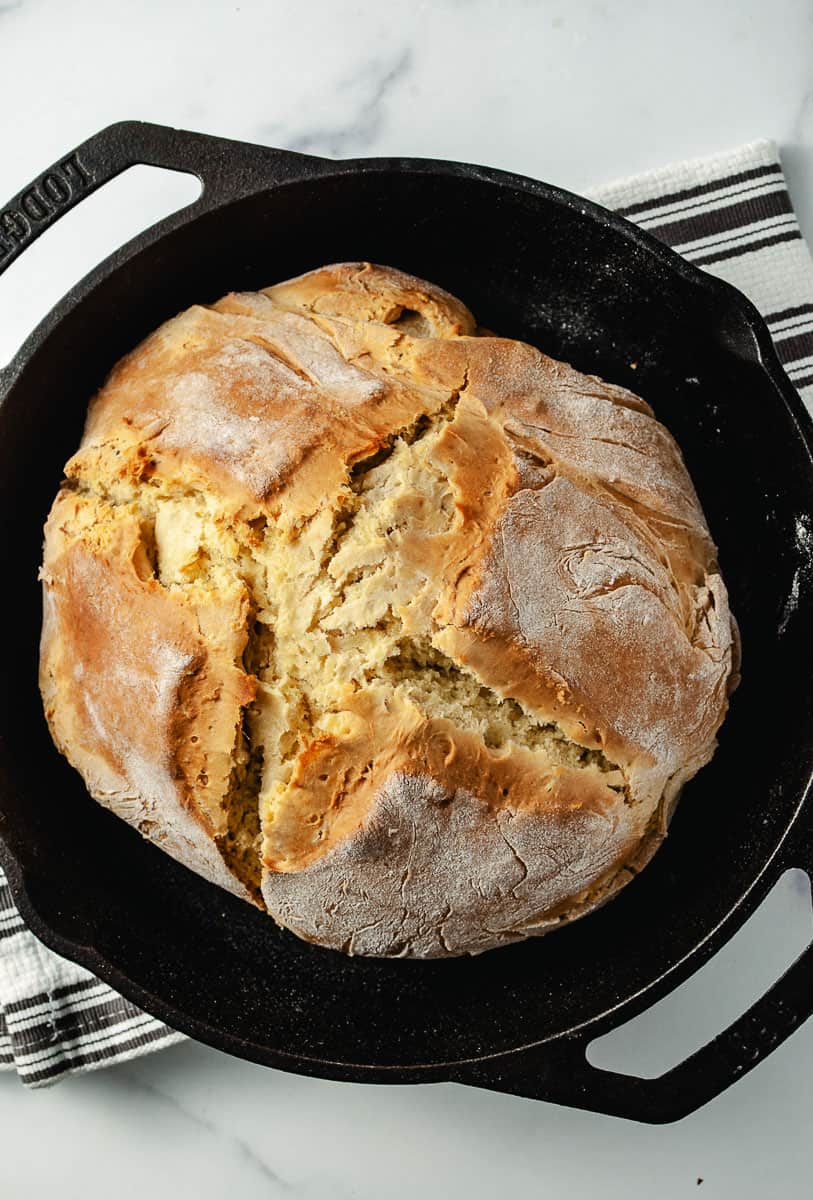
Understanding Irish Soda Bread: A Quick Bread That’s Not Too Quick
Here’s what makes Irish soda bread unique: it’s classified as a “quick bread” because it doesn’t require yeast for rising. Instead, the chemical reaction between baking soda and the acidic buttermilk creates carbon dioxide bubbles that give the bread its lift. This means no waiting around for dough to rise. You can have fresh bread on your table in about an hour from start to finish.
However, don’t let the “quick bread” label fool you into thinking this is a simple batter bread. Traditional Irish soda bread has a more substantial texture—not quite as airy as yeasted bread, but not as cake-like as banana bread either. It should have a tender, slightly crumbly interior with a crusty exterior, especially when baked in a cast iron skillet as we do here.
The cast iron skillet is truly the secret weapon in this recipe. It creates an even, intense heat that gives you that gorgeous golden-brown crust while keeping the interior moist and tender. If you’ve never baked bread in cast iron before, you’re in for a treat—the presentation alone makes it look like something from an artisan bakery.
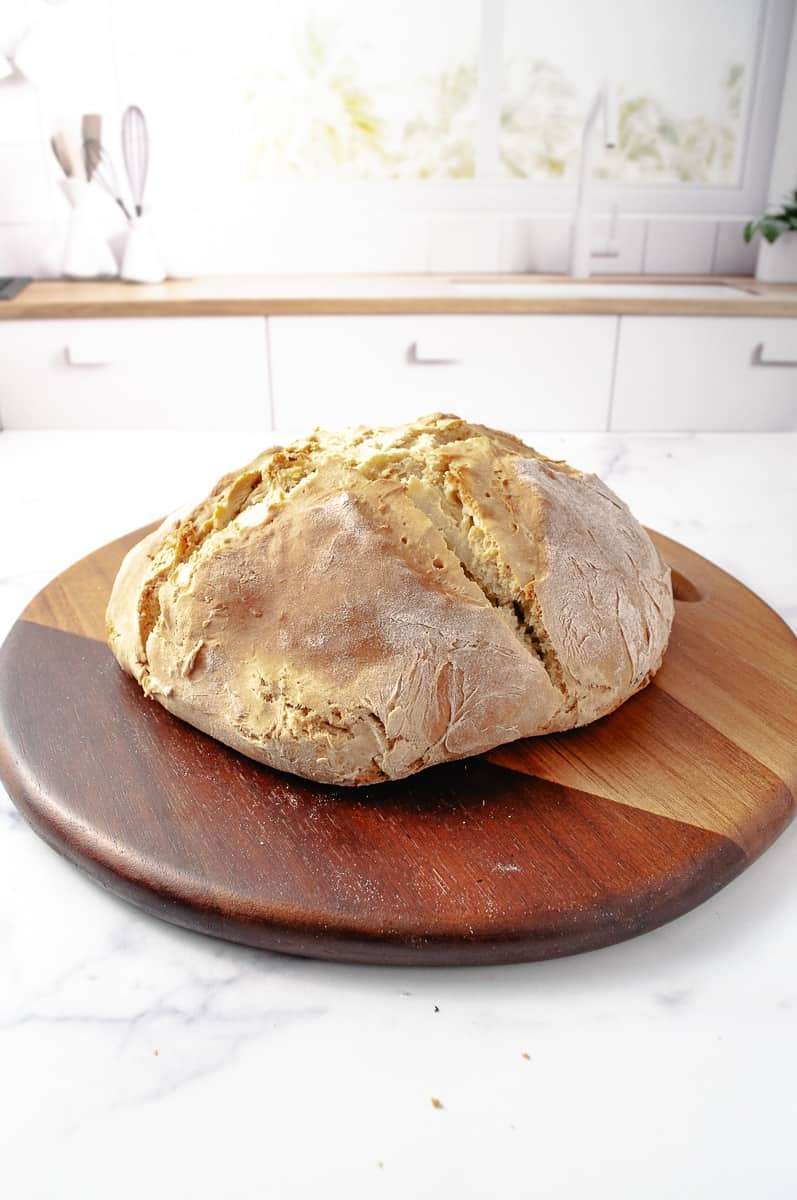
Tools You’ll Need
Before we dive into the recipe, let’s make sure you have everything on hand:
- Large mixing bowl – For combining your dry ingredients
- Pastry cutter – Essential for cutting the butter into the flour mixture; if you don’t have one, two knives or a fork will work in a pinch
- Bread machine – This is your secret weapon for perfect kneading without the effort
- 10-inch cast iron skillet – Creates that perfect crust and beautiful presentation
- Sifter or fine-mesh strainer – For aerating the flour
- Kitchen thermometer – Optional but helpful for checking doneness (you’re looking for 195°F internal temperature)
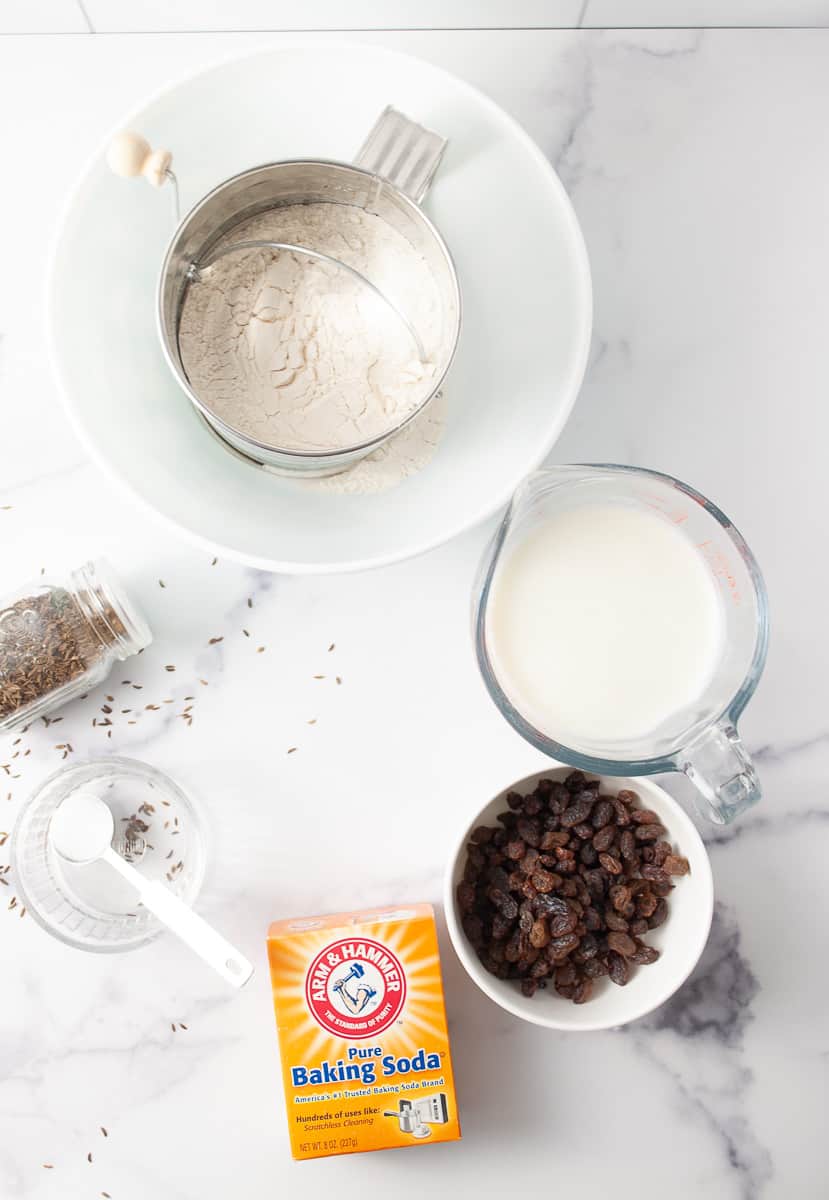
Ingredients for Traditional Irish Soda Bread
Dry Ingredients:
- 4¼ cups all-purpose flour – Sifted for a lighter texture
- 1 teaspoon baking soda – The leavening agent that makes this bread rise
- 1 teaspoon salt – Enhances all the other flavors
- 3 tablespoons sugar – Just a touch of sweetness to balance the tanginess
Wet Ingredients:
- 5 tablespoons cold butter – Cut into small cubes; the cold temperature is important for creating a tender crumb
- 1½ cups buttermilk – The acid in buttermilk activates the baking soda and adds that characteristic tangy flavor
Add-ins:
- 1-2 teaspoons caraway seeds – Traditional in Irish soda bread; these add a subtle, slightly sweet and peppery flavor
- 1 cup raisins (optional) – Traditional additions that add pockets of sweetness

Step-by-Step Instructions
Step 1: Preheat and Prepare (5 minutes)
Preheat your oven to 400°F. This is important—you want your oven fully heated before the bread goes in to ensure even baking and a good rise. While the oven heats, lightly grease your 10-inch cast iron skillet or line it with parchment paper for easier cleanup.
Pro tip: If your cast iron skillet is well-seasoned, you might not need any greasing at all. The bread will develop a beautiful crust naturally.
Step 2: Sift and Combine Dry Ingredients (5 minutes)
In your large mixing bowl, sift 4¼ cups of all-purpose flour. Sifting isn’t just for show—it aerates the flour, removes any lumps, and helps create a lighter texture in your finished bread. Add the baking soda, salt, and sugar to the sifted flour, then whisk everything together until evenly combined.
Pro tip: Make sure your baking soda is fresh. To test it, add a teaspoon to a small amount of vinegar, if it fizzes vigorously, it’s good to use. Old baking soda won’t give you the rise you need.
Step 3: Cut in the Butter (5 minutes)
Cut your cold butter into small cubes—roughly ½-inch pieces work well. Add these to your flour mixture. Using your pastry cutter, work the butter into the flour until the mixture resembles coarse crumbs with pea-sized pieces of butter throughout. This technique is similar to making biscuits or pie crust—those little bits of butter will create tender, flaky pockets in your bread.
If you don’t have a pastry cutter, you can use two knives in a scissoring motion, a fork, or even your fingertips. Just work quickly if using your hands, so the butter stays cold.
Step 4: Let the Bread Machine Do the Kneading (10 minutes)
Here’s where the magic happens! Transfer your flour-butter mixture to the bread machine pan. Pour in the buttermilk and sprinkle in the caraway seeds (and raisins if using).
Set your bread machine to the “quick bread” or “dough” cycle. The key here is to let it knead for no more than 10 minutes. You want the dough just barely brought together—overworking will result in tough bread. The dough should be shaggy and slightly sticky, not smooth like traditional bread dough.
Important: Keep an eye on your bread machine during this process. Some machines knead more aggressively than others. If your dough comes together in less than 10 minutes, stop the machine early.
Step 5: Shape the Loaf (3 minutes)
Remove the dough from the bread machine—it will be soft and slightly sticky, which is exactly what you want. On a lightly floured surface, gently shape it into a round loaf. Don’t knead or work it too much; just bring it together into a cohesive ball.
Place the shaped dough into your prepared cast iron skillet. Using a sharp knife, cut a deep cross (about ½ inch deep) across the top of the loaf. This traditional mark isn’t just decorative—it helps the bread expand properly while baking and allows heat to penetrate to the center.
Traditional Irish folklore: The cross was said to “let the fairies out” or to ward off evil and protect the household. How’s that for a conversation starter at your dinner table?
Step 6: Bake to Golden Perfection (45-50 minutes)
Place your cast iron skillet in the preheated 400°F oven. Bake for 45-50 minutes, until the bread reaches an internal temperature of 195°F and the top is a beautiful golden brown.
You’ll know it’s done when:
- The crust is deep golden brown
- The bread sounds hollow when tapped on the bottom
- An instant-read thermometer inserted in the center reads 195°F
Important note: Don’t open the oven door for the first 30 minutes of baking. This can cause the bread to collapse or bake unevenly.
Step 7: Cool Before Slicing (10 minutes)
Remove the bread from the oven and let it cool in the skillet for about 10 minutes before transferring to a wire rack. I know it’s tempting to slice into it immediately, but those few minutes of resting allow the interior crumb to set properly.
For the absolute best texture, let the bread cool to room temperature before slicing. The interior will continue to firm up as it cools, giving you those perfect, clean slices.
Helpful Tips and Tricks
- Don’t overmix: This is the number one mistake people make with Irish soda bread. The dough should look rough and shaggy, not smooth. Overworking develops gluten, which makes the bread tough and dense.
- Use cold butter: Cold butter creates those wonderful flaky pockets throughout the bread. If your kitchen is warm, pop the cubed butter in the freezer for 5 minutes before adding it to the flour.
- Fresh buttermilk matters: The acid in buttermilk is essential for activating the baking soda. If your buttermilk is old or has separated, your bread won’t rise properly.
- The bread machine is optional: If you don’t have a bread machine, you can mix this entirely by hand. Just use a gentle hand and stop mixing as soon as the dough comes together.
- Baking temperature: A hot oven (400°F) is crucial for getting that crusty exterior while keeping the inside tender. Don’t be tempted to lower the temperature.
- Storage and Reheating
- Irish soda bread is best enjoyed the day it’s made, but you can store leftovers:
- Room temperature: Wrap tightly in plastic wrap or store in an airtight container for up to 2 days
- Refrigerator: Will stay fresh for up to 5 days (though it may dry out slightly)
- Freezer: Wrap tightly in plastic wrap, then aluminum foil. Freeze for up to 3 months
- To reheat, wrap in foil and warm in a 300°F oven for 10-15 minutes.
Variations and Substitutions – Traditional Variations
- With Raisins: Add 1 cup of raisins (regular or golden) to the dough along with the caraway seeds for a sweeter, more festive loaf.
- With Currants: Traditional Irish recipes often use currants instead of raisins. They’re smaller and slightly more tart.
- Extra Caraway: If you love the flavor of caraway, increase to 2 tablespoons for a more pronounced taste.
Frequently Asked Questions
A: Absolutely! The bread machine is simply a convenient way to mix and knead the dough, but it’s not essential. To make by hand, combine all dry ingredients in a large bowl, cut in the butter with a pastry cutter, then make a well in the center. Pour in the buttermilk and caraway seeds, and stir with a wooden spoon just until the dough comes together. Turn out onto a floured surface, shape gently into a round, and proceed with the recipe as written.
A: The most common culprit is overmixing. Irish soda bread should be mixed just until the ingredients come together—the dough will look rough and shaggy, not smooth. Overmixing develops gluten, which creates a tough, dense texture. Also, check that your baking soda is fresh; old baking soda won’t provide adequate lift.
A: Yes! While caraway seeds are traditional and add wonderful flavor, they’re not essential. Some people find caraway too strong, so feel free to omit it entirely or replace it with other seeds like fennel or poppy seeds.
A: The bread is done when it reaches an internal temperature of 195°F, the crust is deep golden brown, and the loaf sounds hollow when tapped on the bottom. If you don’t have a thermometer, insert a toothpick or skewer into the center—it should come out clean or with just a few dry crumbs.
A: Can I bake this in a regular baking pan instead of cast iron?
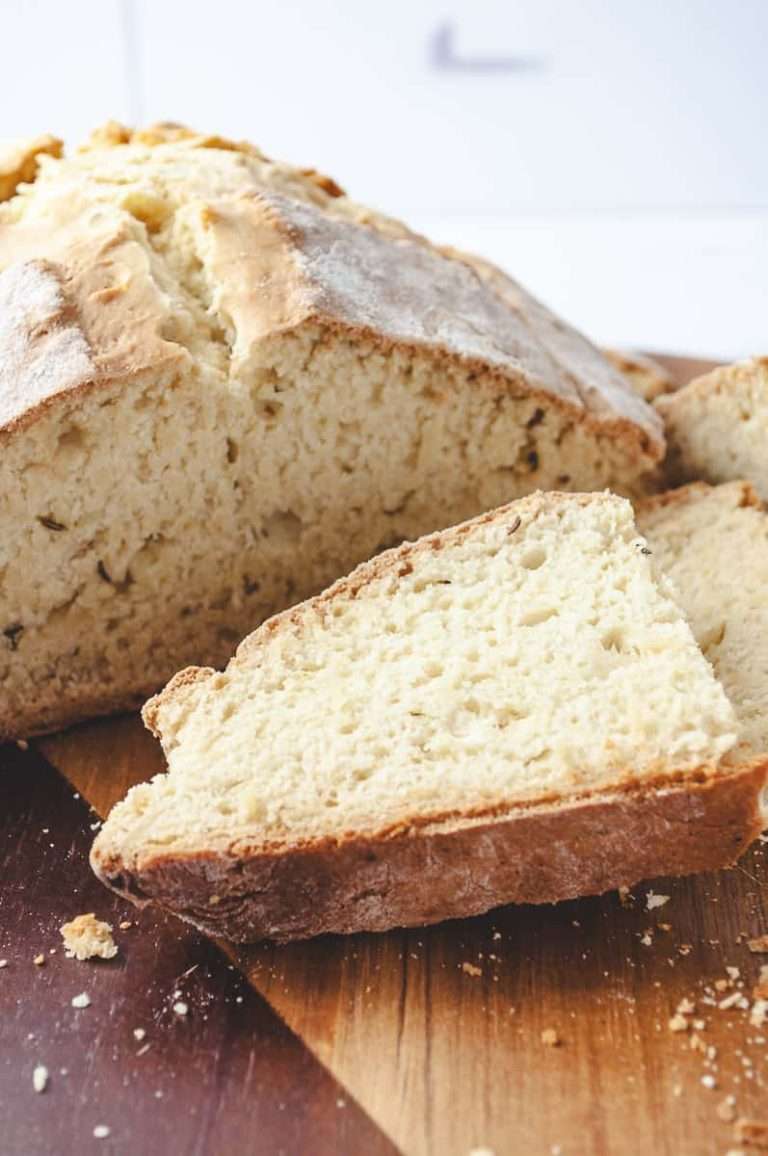
Irish Soda Bread Recipe Easy Knead with Bread Machine
There is nothing better than the smell of fresh bread baking in your kitchen. And you can have this wonderful smell with homemade bread all year long. If you are celebrating St. Patrick’s Day try this easy Irish Soda Bread recipe where all the kneading is done in your bread machine.
- Total Time: 55 minutes
- Yield: 10 servings 1x
Ingredients
- 4 and 1/4 cups of all-purpose flour.
- 1 teaspoon Baking Soda
- 1 teaspoon of Salt
- 3 tablespoons of Sugar
- 5 tablespoons of cold Butter, cut into cubes
- 1 and 1/2 cups of Butter Milk
- 1 t0 2 teaspoons Caraway Seeds
- (optional 1 cup of raisins)
Instructions
- Preheat oven to 400° F.
- In a large bowl sift 4 and 1/4 cups of flour. Combine flour with baking soda, and sugar.
- Cut the butter into small squares and add to the flour mixture.
- Using a pastry cutter cut in the butter to the flour mixture.
- Add the flour mixture to the pan of the bread machine and add the butter milk and caraway seeds.
- Set the bread machine on a quick bread cycle and let the bread machine knead the dough for no more than 10 minutes.
- On a floured surface form the dough into a round loaf and set it into the cast iron skillet.
- Bake at 400° F for 45 to 50 minutes until the bread is at an internal temperature of 195°F, and to top is golden brown.
- Remove the bread and allow it to cool to room temperature for 10 minutes before cooking.
Notes
- You do not have to use the bread machine but knead by hand. I have found that using the bread machine to lead on the quick bread cycle makes a smooth dough and makes a nicer loaf.
- Do not use the dough cycle as it kneads too long.
- I have tried several traditional Irish Soda Bread Recipe but found that this one was best for using the bread machine, Inspired by, “Grandma’s Irish Soda Bread”
- Prep Time: 10 minutes
- Cook Time: 45 minutes
- Category: Bread
- Method: Baking
- Cuisine: Irish
Nutrition
- Serving Size: 1 serving
- Calories: 292
- Sugar: 6.5 g
- Sodium: 377 mg
- Fat: 8.3 g
- Carbohydrates: 47.9 g
- Fiber: 1.7 g
- Protein: 6.2 g
- Cholesterol: 15.6 mg